How do systems of belief, past and present, construct space and authority?
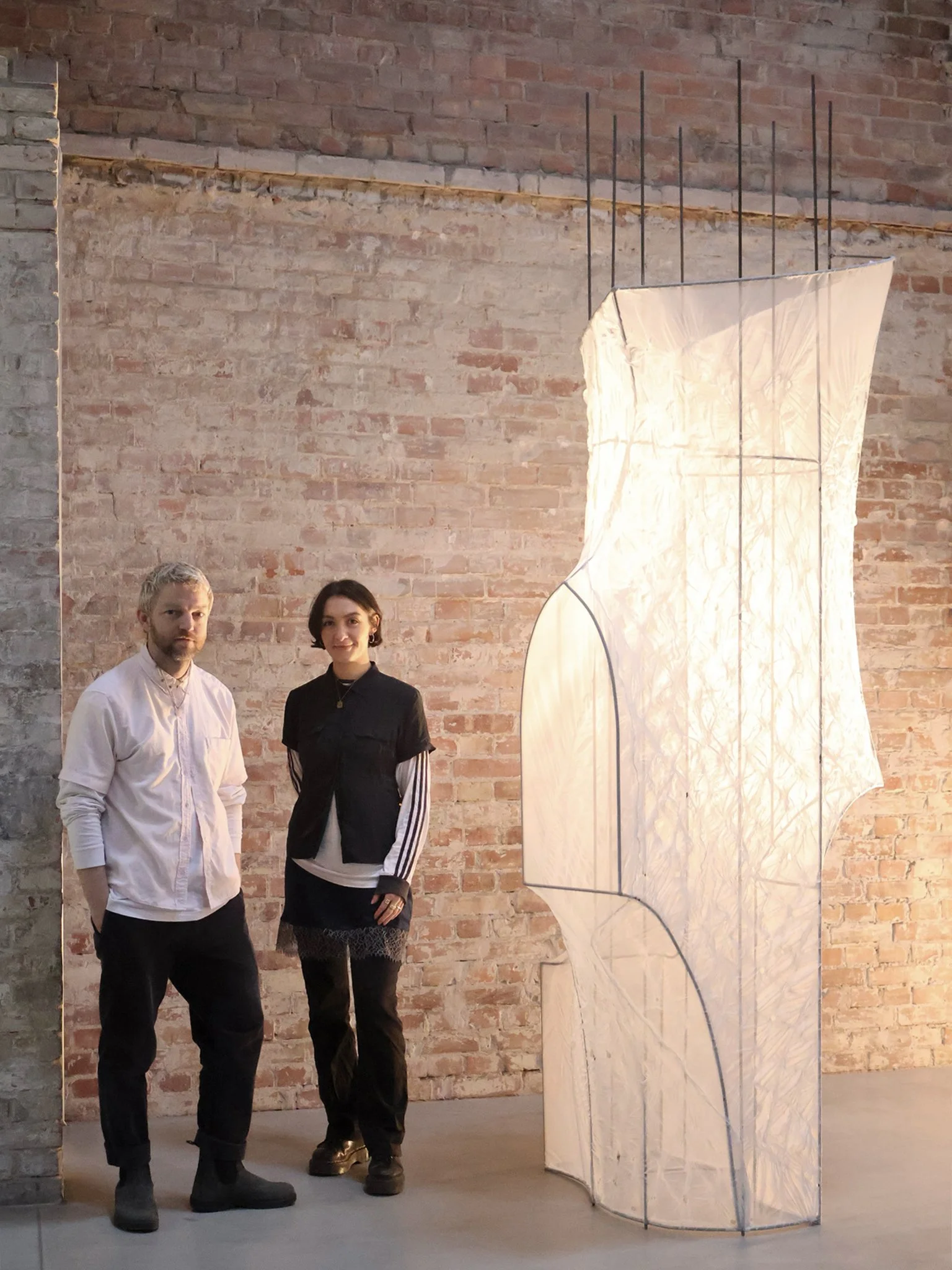
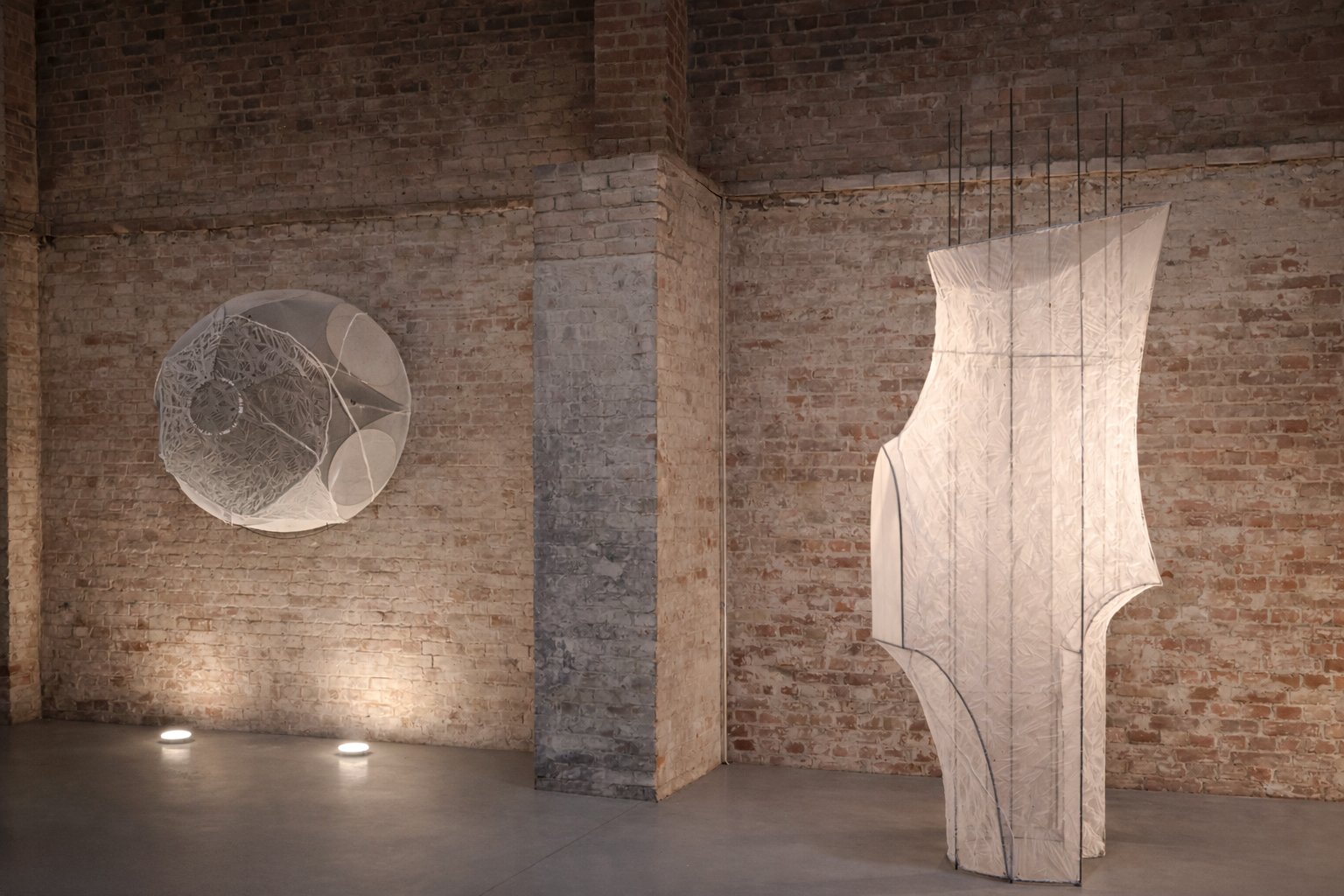
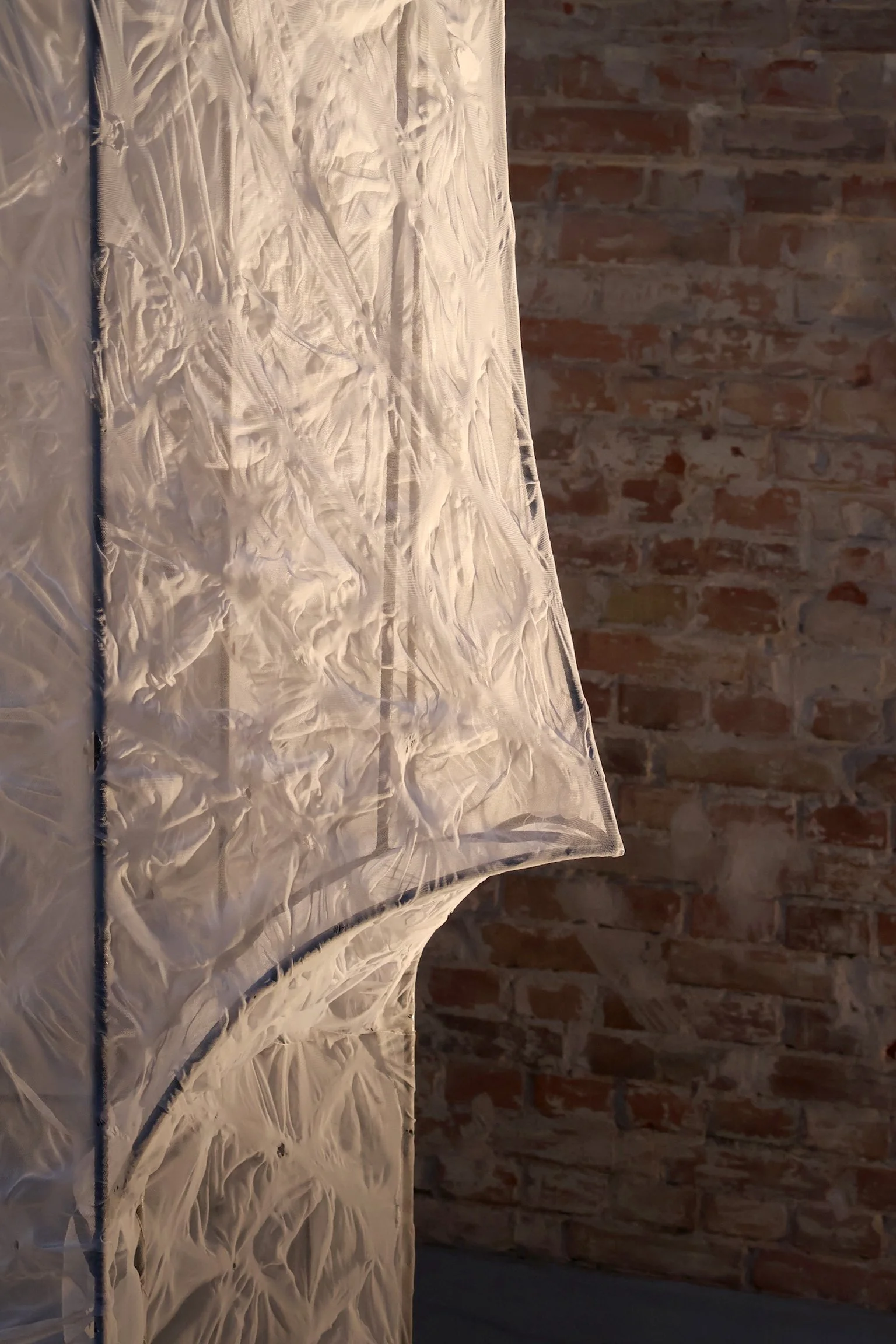
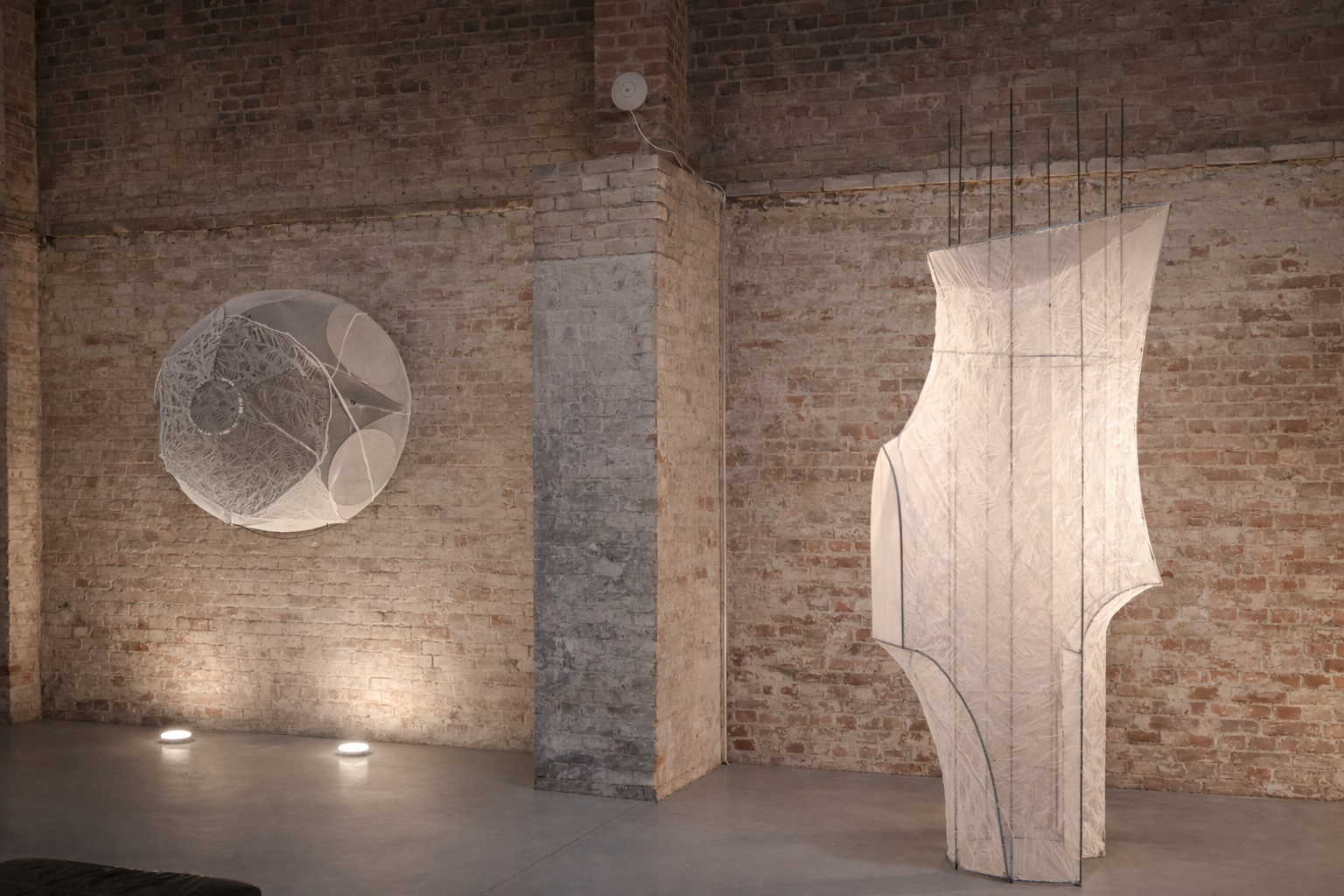
Within Soft Partitions, the collaborative works by Maria Lunetto and Kevin Driscoll function as both spatial elements and conceptual thresholds. They do not divide a room through mass, but through suggestion. The piece proposes separation as something experienced mentally and emotionally before it becomes materially defined. The boundary is perceptual rather than solid.
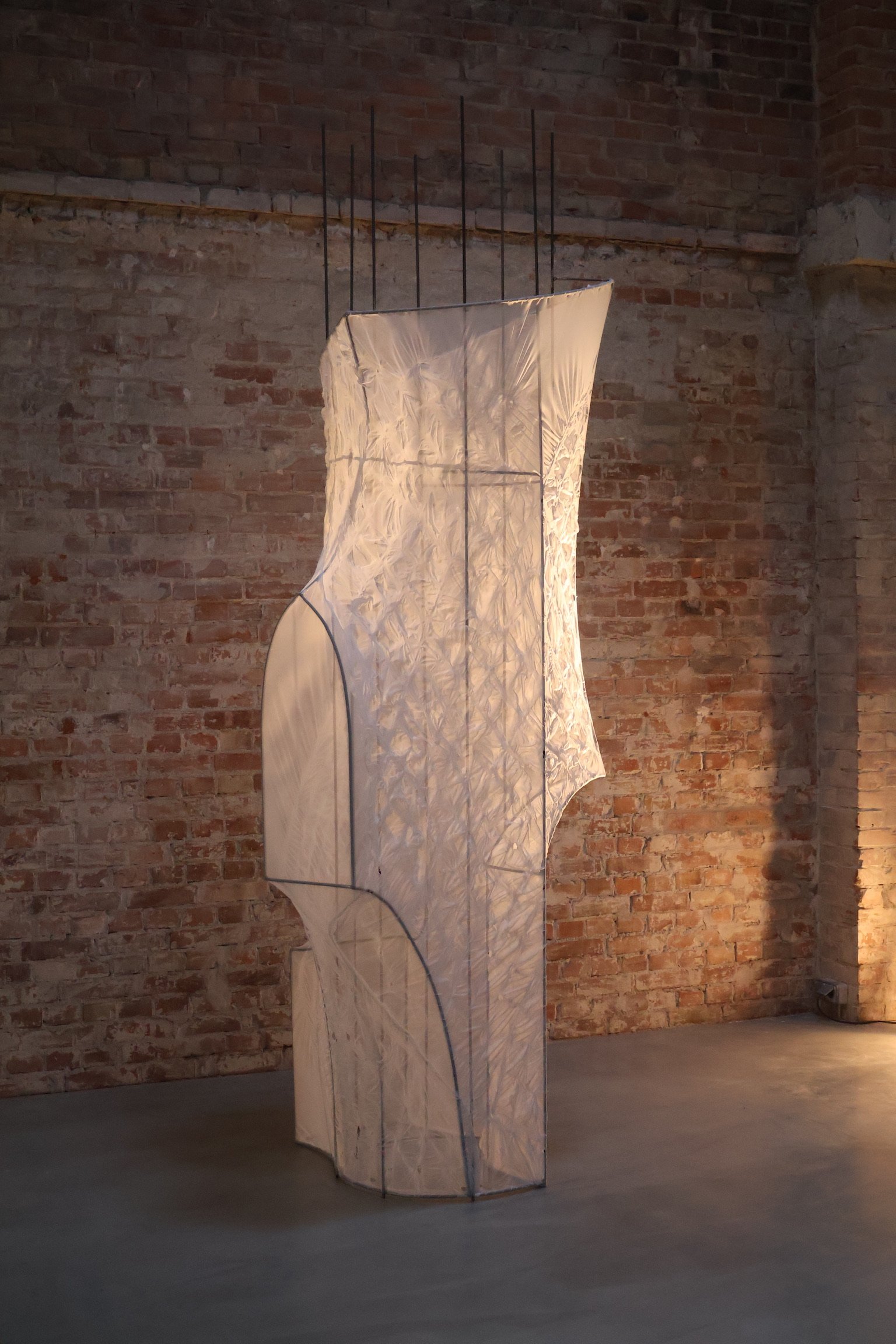
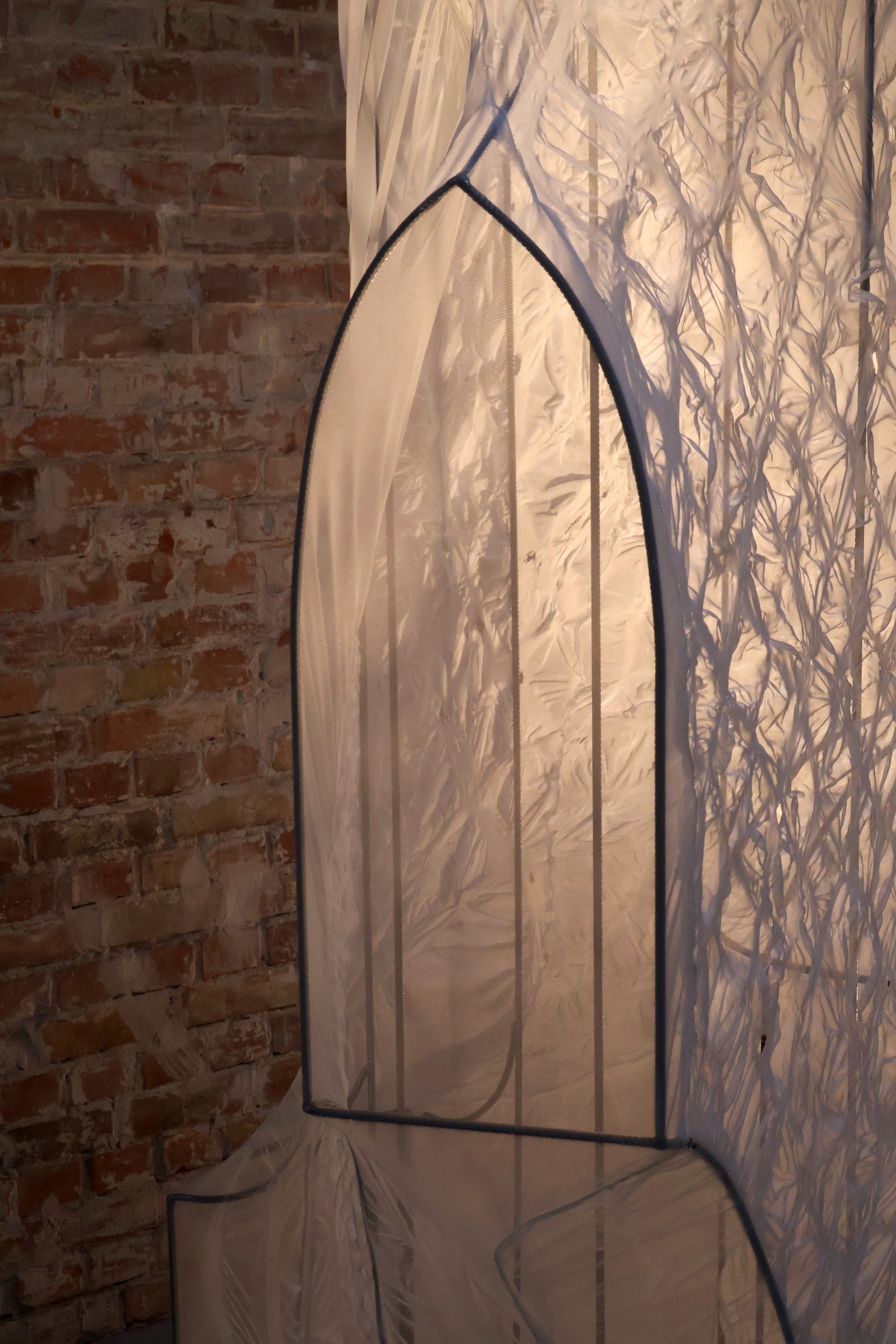
The forms draw on religious and architectural references, but not as devotional homage. It echoes the spatial language of confessionals, prayer niches, and cathedral fragments. These are historically charged spaces that promise intimacy and transcendence while simultaneously structuring hierarchy and exclusion. They appear welcoming, yet they regulate access. They frame vulnerability within systems of authority.
In Voir Dire, one can imagine occupying the interior of the structure, stepping inside its vertical enclosure, yet it resists entry. It stands as a column, a symbol of stability and support, while simultaneously operating like a screen. It suggests a private interior that remains inaccessible. The partition invites and withholds at the same time.
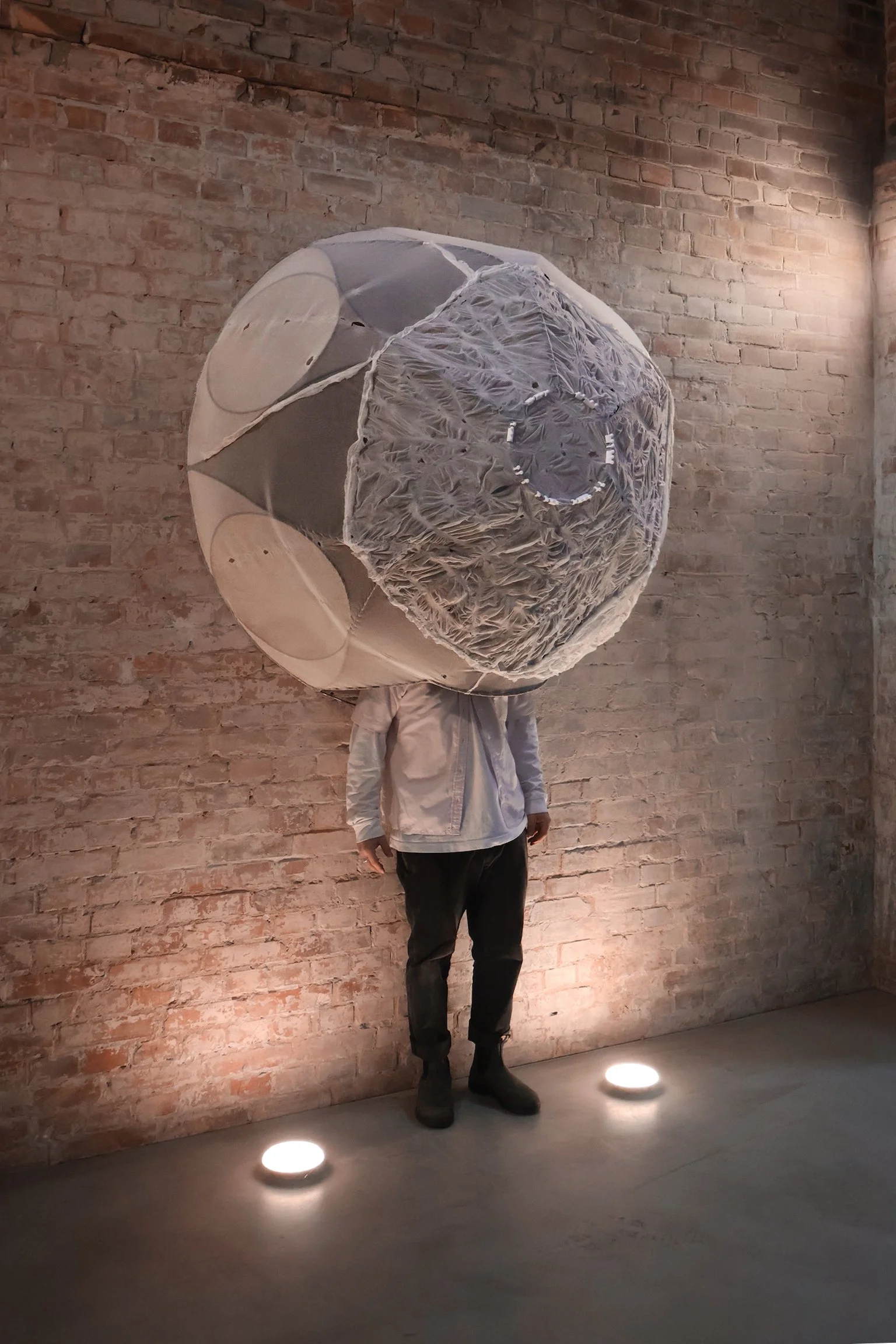
In contrast, the second work in the show, The Rite, reverses this condition of distance. Here, partial access becomes possible. The viewer can step beneath the structure, allowing the head and shoulders to enter its interior. This gesture introduces a moment of intimacy and temporary enclosure. The space that was previously withheld is now partially granted.
The work does not offer a moral position. Instead, it questions how systems of belief, past and present, construct space and authority.